
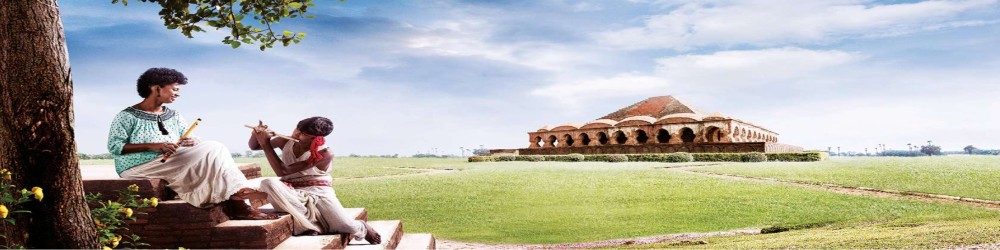
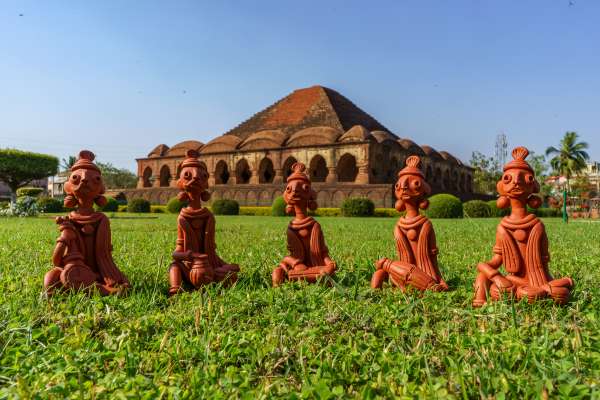
Bishnupur is a famous municipality in the Bankura District of West Bengal and located at about 132 km from Kolkata. It is famous for its terracotta temples and Baluchari sarees. The town has a glorious past that is reflected in its rich architecture, music, and handicrafts. It prospered in the 17th and early 18th centuries under the rule of a line of Hindu Rajas of the Malla dynasty. Bishnupur developed a unique form of architecture and has perhaps the most brilliant and detailed terracotta work in Eastern India that has withstood the ravages of time. The Terracotta tiles depict stories from Ramayana and Mahabharata. The Temples like the Shyam Ray Temple, the twin shrines of Jorbangla and the Rasmancha are a must visit.
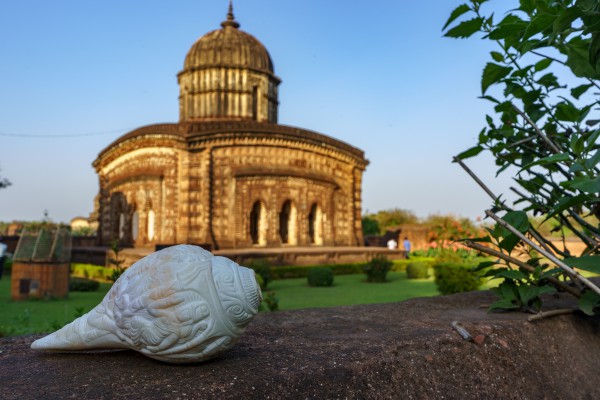
Bishnupur is also known for its traditional handloom sarees, pottery, artifacts, and jewellery made of terracotta, and the School of Hindustani Music which flourished under royal patronage along with the Bishnupur School of Painting. This style of music is still being kept alive in local academies of music. The history of Bishnupur can be traced back to 694 A.D, when King Raghunath founded the Malla dynasty. However, it was much later in 994 A.D that the place was named Bishnupur. The name Bishnupur is derived from the name of the Hindu God Vishnu. In addition to sightseeing and shopping, the classical dance and music festival called Bishnupur Mela hosted by the city every year is an experience that one should not miss.
By Air:Nearest airport to Bishnupur is Netaji Subhas Chandra Bose International airport, Kolkata. It is well connected to kolkata by road and rail network.
By Train:Bishnupur can be reached by train and regular trains are available from Howrah railway station.
By Road:It is well connected by road with Kolkata and surrounding towns like Asansol, Durgapur, Burdwan, Panagarh and other parts of the state.
Shyamarai Temple:The Shyamarai Temple or Pancharatna Temple is to the north of the Bishnupur village and is famous for its rich architectural beauty. Standing on a low square plinth, this Pancharatna brick temple was built by the Malla King Raghunath Singha in AD 1643 and noted for elaborate terracotta ornamentations. The square-shaped temple has its interior and exterior decorated with wonderful terracotta tiles. Various pictures and carvings at the temple walls depict the stories of Lord Krishna and the Gopis. It also includes scenes from the Ramayana, Mahabharata and other Puranic stories, plants, animals, and grotesque figures.
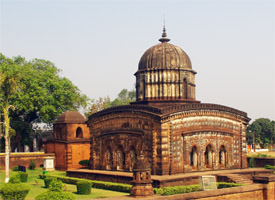
Radhya Shyam templeLocated just beside the famous Mrinmayee Mata Temple of Bishnupur, this Ekaratna temple made with carved stones consists of a square curved roof structure with a single tower and a fluted dome on top. Traces its history from 1758, Radha Shyam Temple in Bishnupur was constructed by the King Chaitanya Singha. This south-facing terracotta temple stands within a large courtyard enclosed by a high boundary wall. The outer walls are fashioned with carvings in low relief, which are decorated with fine elaborate stucco ornamentation has enriched the temple. It is a living temple enshrining the images of Lord Krishna and Radha in the sanctum. Because of its historical significance and heritage value, the temple is well preserved by the Archaeological Survey of India (ASI).
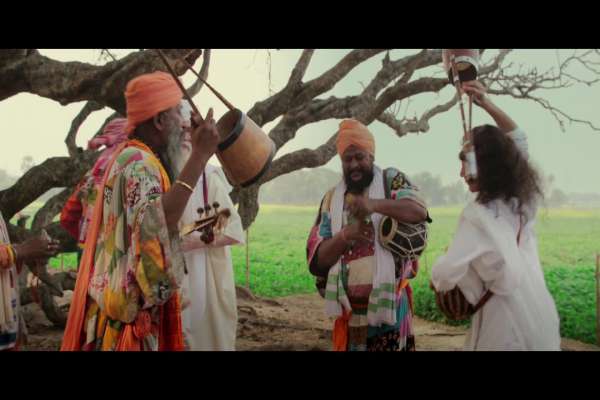
Baul & Fakirs:Baul and Fakirs, also referred as the wandering minstrels and mystics of Bengal are known through their enchanting and enigmatic songs to express their spiritual beliefs. The districts of Murshidabad, Nadia, Bankura, Bardhaman, Birbhum are traditionally the principal centers of Baul Fakir culture. Their singing is accompanied by a musical instrument called ‘ektara’. Elements of Sufi and Vaishnav philosophy primarily combine their belief system. This Baul song has become quite popular and has received national recognition as well.
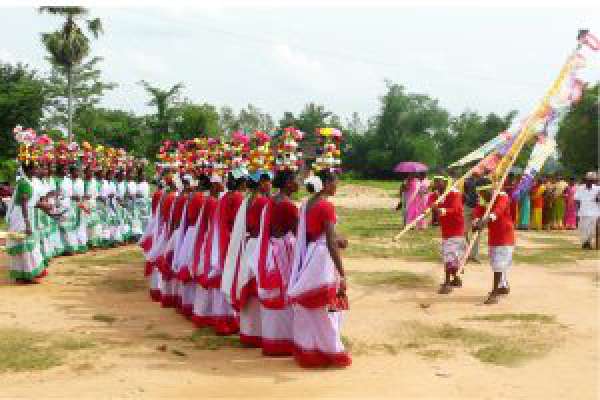
Jhumur:Jhumur folk song is an ancient musical form that belongs to the red soiled regions on the western frontier of West Bengal- Purulia, Bankura, Bardhaman and Birbhum. Jhumur melodies and move are popular among local artisan communities and tribal's like Santhal, Munda, Oraon, Kharia, Birharh tribes. Jhumur is known for its lyrical and literary significance because of the use of ancient language. Different Jhumur tunes are sung throughout the year based on the season. For example, Chaitali is sung within the month of Chaitra (spring) and Bhaduria is sung within the month of Bhadra.
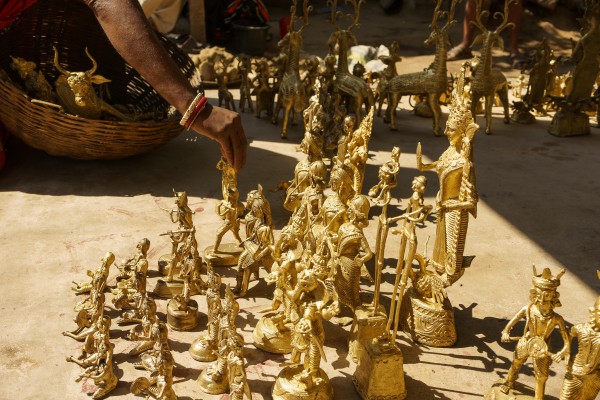
Dokra Metal Casting:The tribal people of Bishnupur known as ‘Dokra Damar’ practiced this special form of art, ‘Dokra Metal Casting’. The core material of this crafting technique is clay over which wax coating is applied. After the wax coating, the models are applied with clay paste coating. Several objects have been prepared from this technique like religious symbols, jewelry, cutlery, bells. Many women prefer to wear dokra jewelry and this art has become a surviving legacy of Bishnupur.
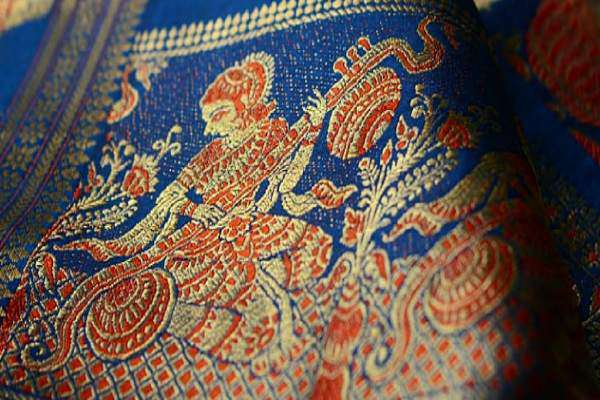
Baluchari Sari:Bishnupur is also very famous for Baluchari silk saree. These are special types of silk sarees which has intricate weaving in the pallu and borders. With the amazing weaving skill, the artists showcase the mythological stories from Ramayana and Mahabharata in these sarees. Often rich in colors, these sarees come with a natural shine and glossy look. These sarees are made from pure or authentic form of silk.
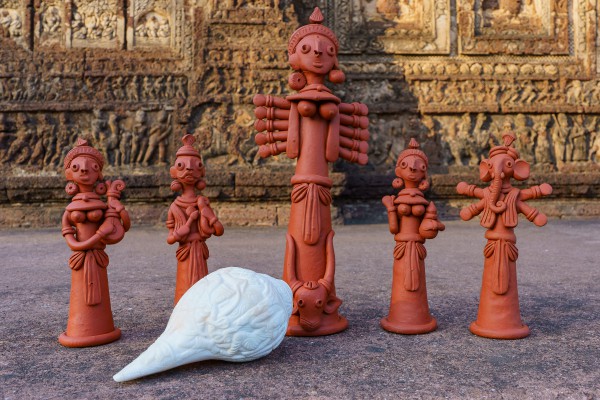
Terracota Work:With the burnt clay bricks, the architects of Bengal created a new type of craft, popularly known as ‘Terracota’. During the seventeenth century, the art of terracotta reached its highest peak. Raja Jagat Malla and his descendants built several temples made of terracotta and stone art. One can experience the magnificent art of terracotta across several temples in Bishnupur like Rasmancha, Jor Bangla temple, Shyam rai temple, and Madan Mohan temple. The terracotta works recount innumerable stories from history and Indian mythology. The terracotta art in the temples depict the scenes from Ramayana and Mahabharata, the life and exploits of Krishna, and stories from Vishnupurana. Apart from temples, diverse types of potteries are made from terracotta. The typical manufacturing style for terracotta potteries involve use of finely refined clay to give a proper shape of a pottery.
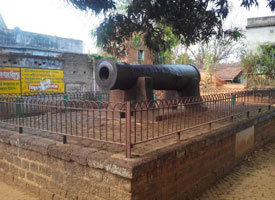
Dal madol:The cannon named as Dal Madol was built by the Malla kings to fight the Maratha invasion. This Cannon is near Chinomasta temple and is significant for the people of Bishnupur as well as Bengal. The cannon measures about 3.8 m in length and has a barrel of 28.5 cms. It was built in the year 1742 under Raja Gopal Singh to protect Bishnupur from Marathas. One of the most fascinating facts about this cannon is that it is purely made up of iron materials and still it’s free from rust even after kept in open under sunlight and rain since its inception.